Trust-Based Leadership Training
Building Shared Language, Shared Accountability, and Systems That Hold Under Pressure
Roy Reid, APR, CPRC, MCPC
Most organizations assume people understand trust.
They assume leaders know how to build it. Teams know how to sustain it. And employees naturally understand what trust should look like in practice during pressure, conflict, change, or uncertainty.
But that assumption is often where organizational fracture begins.
Because trust is not built through slogans, mission statements, or values painted on walls.
Trust is built through repeated behaviors, shared expectations, accountability, communication, and consistent experiences over time.
And those behaviors must be taught, practiced, reinforced, measured, and integrated into the organization's daily operating system.
That is why trust-based leadership training matters.
Not as a motivational exercise.Not as a one-day workshop.And not as a “soft skill” initiative.
But as operational infrastructure for leadership, culture, communication, and performance.
Why Most Leadership Training Fails
One of the biggest mistakes organizations make is treating leadership development as an event instead of a system.
A speaker comes in.
A workshop is delivered.
People feel inspired for a few hours.
Then everyone returns to the same pressures, habits, communication patterns, and organizational friction that existed before the training.
Nothing fundamentally changes.
Research on adult learning and behavioral psychology consistently shows that sustainable change requires:
repetition,
reinforcement,
shared application,
emotional engagement,
accountability,
and practical integration into everyday behaviors.
Research published by the National Training Laboratories has long demonstrated that retention and application dramatically increase when participants actively discuss, practice, teach, and apply concepts over time rather than simply passively hear information.
Harvard Business Review has also reported that leadership development efforts fail when organizations do not create systems that reinforce behavioral expectations and cultural consistency after training occurs.
In other words, people do not transform because they attended a class.
They transform when new behaviors become integrated into how they think, communicate, decide, respond, and relate to others consistently over time.
That requires intentionality.
And it requires leadership systems.
Trust Requires Shared Language and Shared Experience
One of the most powerful outcomes we observed through The Trust Transformation research was the development of a new shared lens for how participants viewed relationships, communication, accountability, and leadership.
Participants began to see trust not as an abstract concept but as something measurable and actionable.
Once trust became intentional, it changed how they:
approached difficult conversations,
responded to conflict,
handled accountability,
communicated expectations,
and interpreted the behavior of others.
The research revealed statistically significant changes in:
self-perception,
perception of others,
feelings,
self-confidence,
and management of trust.
What emerged most clearly was this:
The training created new “filters” for action and response.
Participants developed a heightened awareness of trust in their relationships and a stronger intentionality regarding how trust was built, reinforced, or damaged through everyday interactions.
That shift matters enormously inside organizations.
When teams share a common language about trust, accountability, communication, and leadership expectations, consistency improves.
Conversations become clearer. Expectations become more transparent. Decision-making becomes more aligned. Conflict becomes healthier. And leaders gain a stronger framework for navigating pressure together.
Culture Cannot Be Delegated to Posters and Policies
Many organizations talk about culture.
Far fewer operationalize it.
High-trust culture is not created through branding campaigns or internal slogans alone. It is built through the consistent reinforcement of shared behaviors and expectations over time.
Research from Great Place to Work® consistently demonstrates that organizations with high-trust cultures experience:
stronger engagement,
higher retention,
greater innovation,
improved collaboration,
and stronger organizational resilience during periods of disruption and change.
Similarly, research published in The Journal of Applied Behavioral Science found that strengthening relational connections inside organizations is often a more powerful catalyst for improved workplace performance than material incentives alone.
But trust cultures do not emerge accidentally.
They are intentionally built.
That requires:
training,
reinforcement,
leadership modeling,
accountability,
coaching,
operational alignment,
and shared ownership.
The Power of the Trust Contract
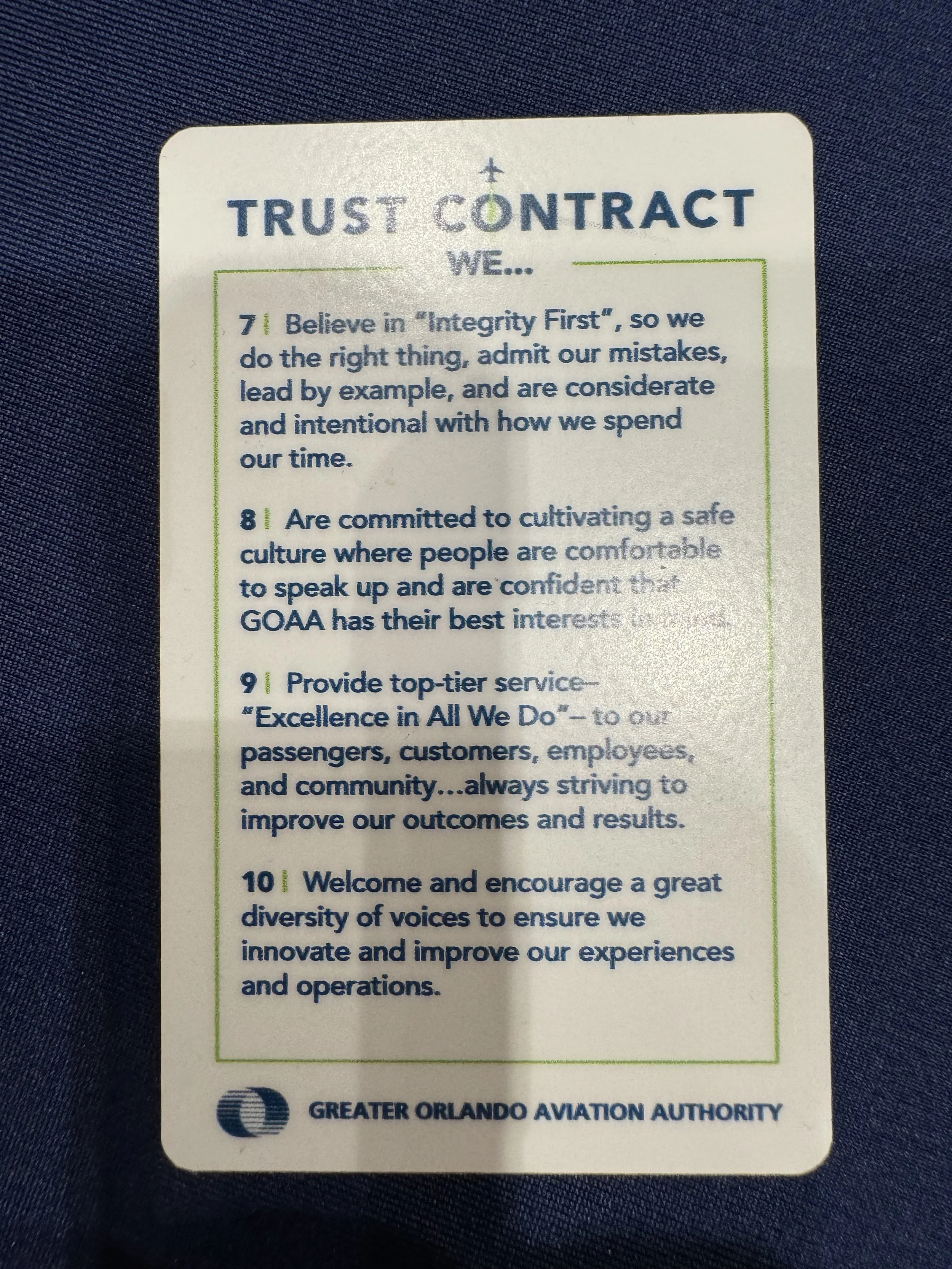
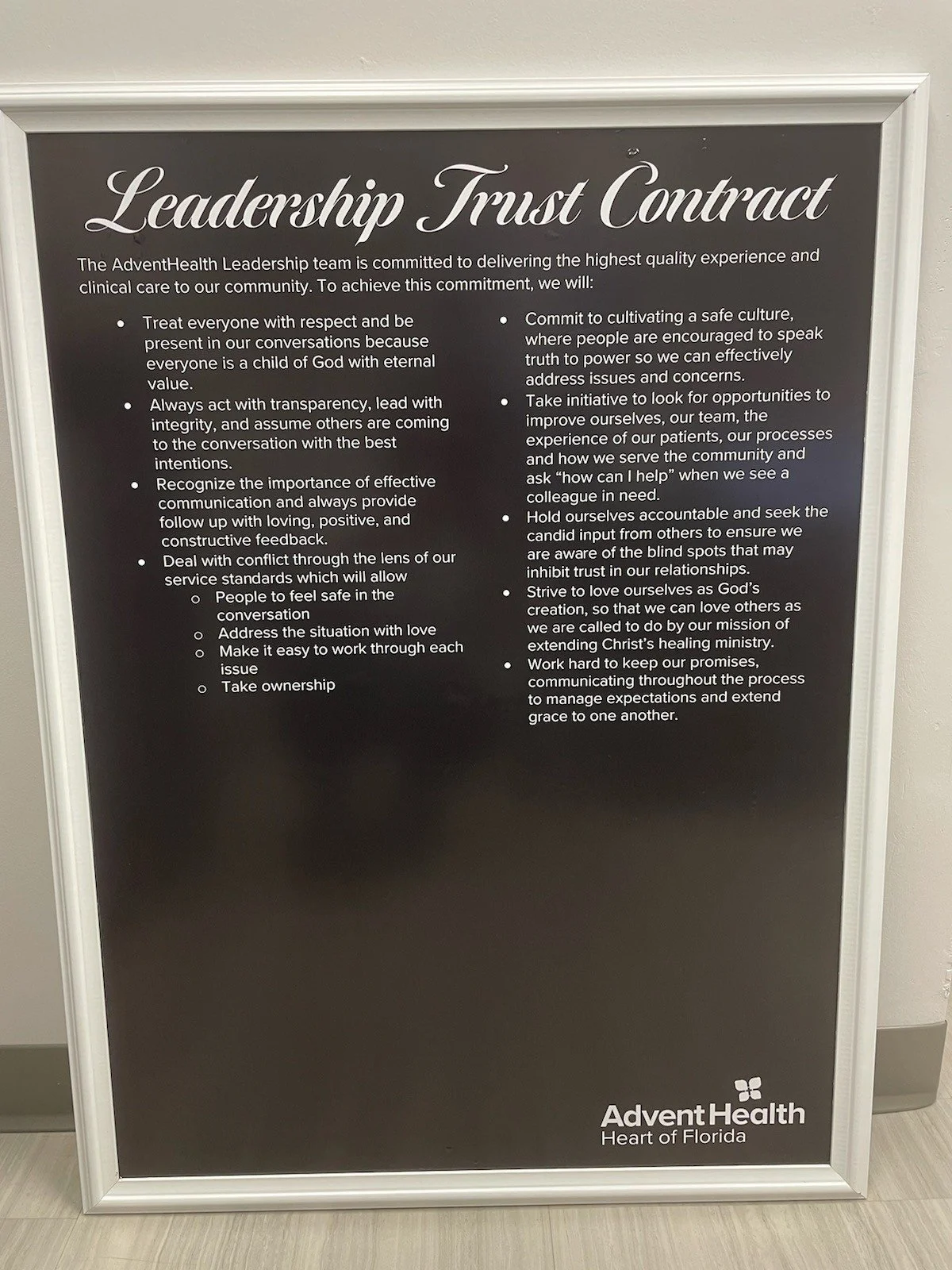
One of the most transformative aspects of The Trust Transformation is the Trust Contract process.
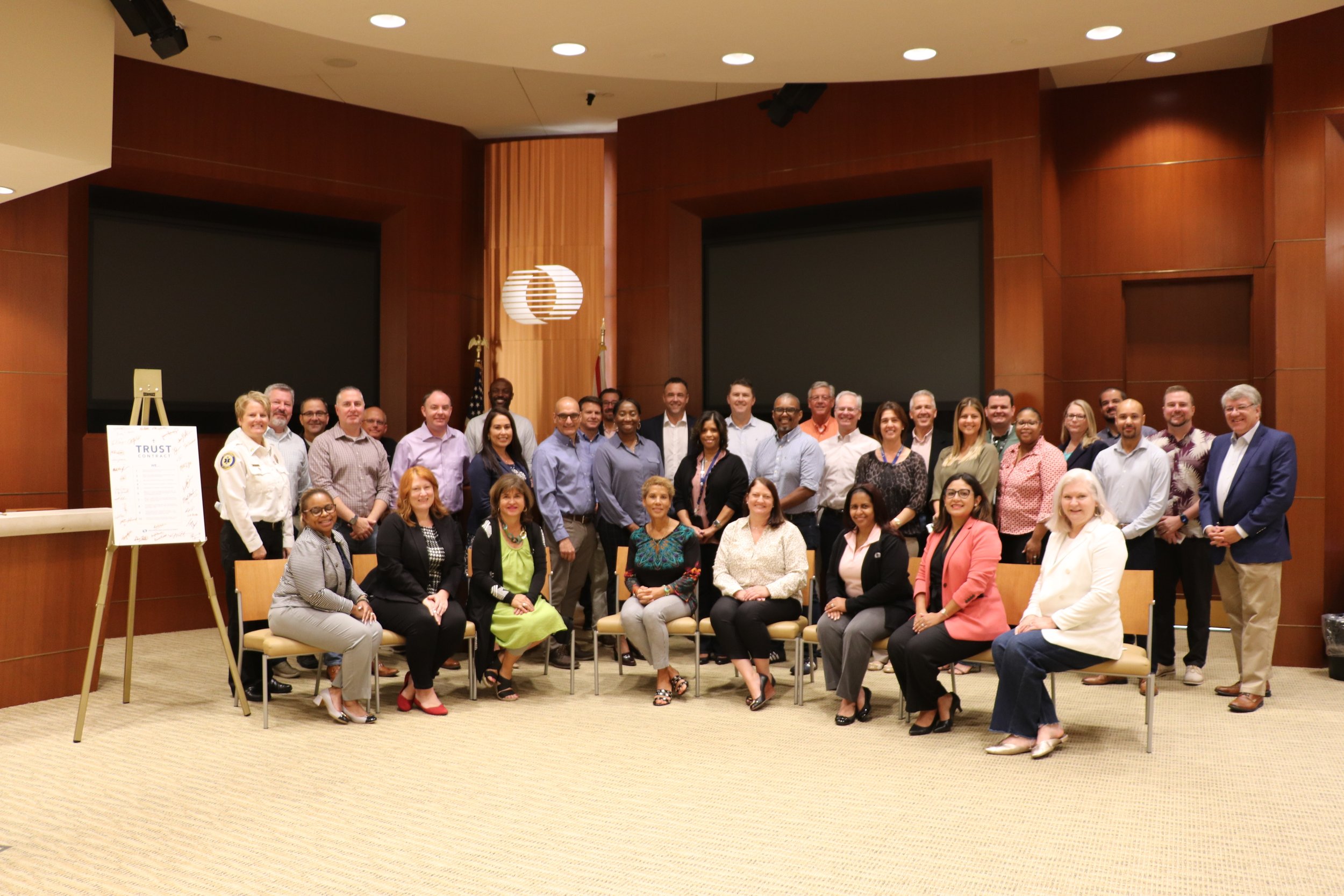
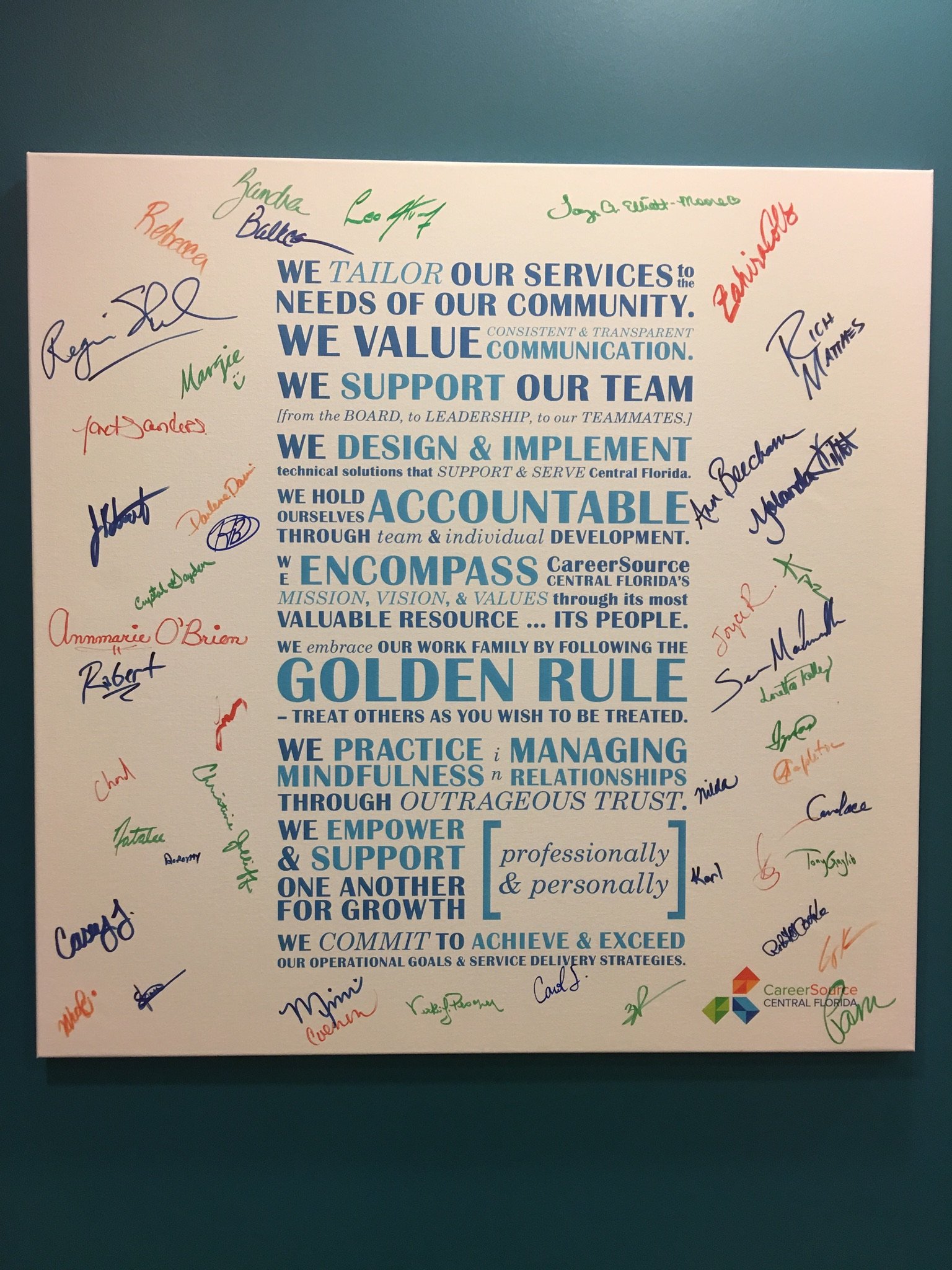
At the conclusion of the training, participants publicly commit to a shared set of principles and behaviors designed to strengthen trust, both personally and professionally.
This matters because behavioral science consistently shows that public commitment increases accountability and follow-through.
More importantly, the Trust Contract creates something many organizations are missing: shared ownership.
The culture is no longer “HR’s initiative.”It is no longer a leadership theory discussed in a conference room. It becomes a collectively authored commitment for how people agree to work, communicate, lead, and respond together.
This “team-as-author” concept creates significantly stronger buy-in because people support what they help create.
The contract becomes:
a behavioral framework,
an accountability tool,
a communication filter,
and a stabilizing reference point during pressure and conflict.
Especially under stress, teams need shared language and shared agreements they can return to.
The Trust Contract provides that anchor.
Sustainable Culture Change Requires Reinforcement
Training alone is not enough.
Sustainable transformation requires:
coaching,
implementation,
reinforcement,
leadership consistency,
and integration into organizational systems.
This is one of the reasons The Trust Transformation includes ongoing exercises, accountability structures, coaching conversations, and implementation frameworks designed to help participants operationalize the principles over time.
Research on habit formation and behavioral change consistently demonstrates that repetition and environmental reinforcement are critical to sustaining new behaviors.
Organizations that successfully strengthen trust and culture intentionally integrate these principles into:
leadership expectations,
onboarding,
communication norms,
performance conversations,
team meetings,
hiring practices,
and operational procedures.
The goal is not inspiration.
The goal is integration.
Because when trust becomes embedded into the operating system of the organization, the effects compound over time:
communication improves,
accountability strengthens,
turnover decreases,
resilience increases,
relationships stabilize,
and leadership becomes more sustainable under pressure.
What Happens When Trust Becomes Operational
Over the years, leaders and organizations implementing trust-centered leadership systems have reported:
stronger leadership alignment,
healthier communication,
improved engagement,
greater transparency,
increased collaboration,
reduced relational friction,
improved customer satisfaction,
stronger retention,
and healthier organizational cultures.
Many leaders also report significant personal benefits outside the workplace:
healthier relationships at home,
lower stress,
improved emotional awareness,
stronger resilience,
and greater peace.
Because leadership pressure rarely stays confined to the office.
And trust is not compartmentalized.
When people become more intentional about communication, accountability, humility, consistency, and stewardship in one area of life, those behaviors tend to strengthen relationships in other areas as well.
Building Systems That Hold Under Pressure
Leadership under pressure exposes every weakness in communication, culture, accountability, and trust.
That is why trust-based leadership training matters.
Not because organizations need more inspiration.
But because people need shared systems that help them:
communicate consistently,
navigate conflict,
reinforce accountability,
strengthen relationships,
and respond to pressure without fracturing culture.
Trust is not a feeling.
It is a leadership operating system.
And operating systems must be intentionally installed, reinforced, and sustained over time.
Start the Conversation
If your organization is navigating pressure, communication challenges, leadership misalignment, turnover, or cultural strain, I’d welcome the opportunity to explore what trust-centered leadership systems could look like for your team.

Trust-Based Leadership Training FAQ
What is trust-based leadership training?
Trust-based leadership training helps leaders and teams develop shared language, communication patterns, accountability systems, and behavioral expectations that strengthen trust throughout the organization. The goal is not simply to improve morale, but to build operational consistency, healthier relationships, stronger alignment, and greater resilience under pressure.
Why is trust important in leadership?
Trust affects how people communicate, collaborate, make decisions, navigate conflict, and respond under pressure. High-trust leadership environments typically experience stronger engagement, better retention, healthier accountability, improved collaboration, and greater organizational resilience.
Why do most leadership training programs fail?
Many leadership programs fail because they are treated as one-time events rather than integrated systems. Sustainable behavioral change requires reinforcement, coaching, shared application, accountability, and integration into organizational culture and leadership practices over time.
What makes trust-based leadership training different from traditional leadership training?
Traditional leadership training often focuses primarily on information transfer or inspiration. Trust-based leadership training focuses on behavioral integration, communication patterns, shared accountability, relational awareness, and creating systems that help leaders and teams consistently apply trust-centered behaviors in real-world situations.
What is a leadership operating system?
A leadership operating system is the underlying framework that shapes how people communicate, make decisions, handle accountability, respond to conflict, and build relationships throughout an organization. Trust functions as an operating system because it influences nearly every interaction inside leadership teams and organizational culture.
What is The Trust Transformation?
The Trust Transformation is an evidence-informed leadership framework designed to help leaders and organizations strengthen communication, accountability, organizational trust, resilience, and relational health under pressure. The framework focuses on operationalizing trust through shared language, behavioral awareness, coaching, reinforcement, and implementation systems.
What is the Trust Contract?
The Trust Contract is a shared behavioral agreement developed during The Trust Transformation process. Participants collectively identify and commit to principles and behaviors designed to strengthen communication, accountability, leadership consistency, and trust throughout the organization.
Why does shared language matter in organizational culture?
Shared language creates consistency in how people interpret communication, accountability, conflict, expectations, and leadership behaviors. When teams share common frameworks and definitions around trust and relationships, communication becomes clearer, alignment improves, and relational friction decreases.
Can trust actually be measured?
While trust itself is relational, organizations often measure trust outcomes using indicators such as engagement, retention, communication effectiveness, turnover, customer satisfaction, accountability, collaboration, and organizational alignment. Research from Great Place to Work®, Gallup, and other organizational studies consistently demonstrates measurable differences between high-trust and low-trust workplace cultures.
How does trust-based leadership training affect employees outside of work?
Research consistently shows that workplace stress and communication patterns affect emotional well-being, marriages, parenting, physical health, and personal relationships. Leaders who become more intentional about communication, accountability, emotional awareness, and trust at work often experience positive changes in relationships at home as well.
How long does sustainable culture change take?
Sustainable culture change is an ongoing process rather than a one-time initiative. Organizations that successfully strengthen trust and leadership consistency typically reinforce these principles over time through coaching, leadership modeling, accountability systems, communication rhythms, onboarding, and operational integration.
Is trust-based leadership training only for struggling organizations?
No. High-performing organizations often proactively invest in trust-centered leadership systems to strengthen communication, alignment, resilience, leadership consistency, and long-term cultural sustainability before significant organizational strain develops.
How do we begin implementing trust-centered leadership systems?
The process usually begins with leadership conversations, an organizational assessment, and the identification of areas where communication, alignment, accountability, trust, or relational friction may be affecting culture and performance. From there, organizations can begin building shared frameworks, leadership practices, and reinforcement systems that support healthier communication and organizational trust over time.